Bluejay Booster Token
Friday Night Lights, structured.
A season pass token paired with a laminated badge. Concession discounts, raffle entries, VIP seating lottery. Funds equipment, travel, and youth recognition.
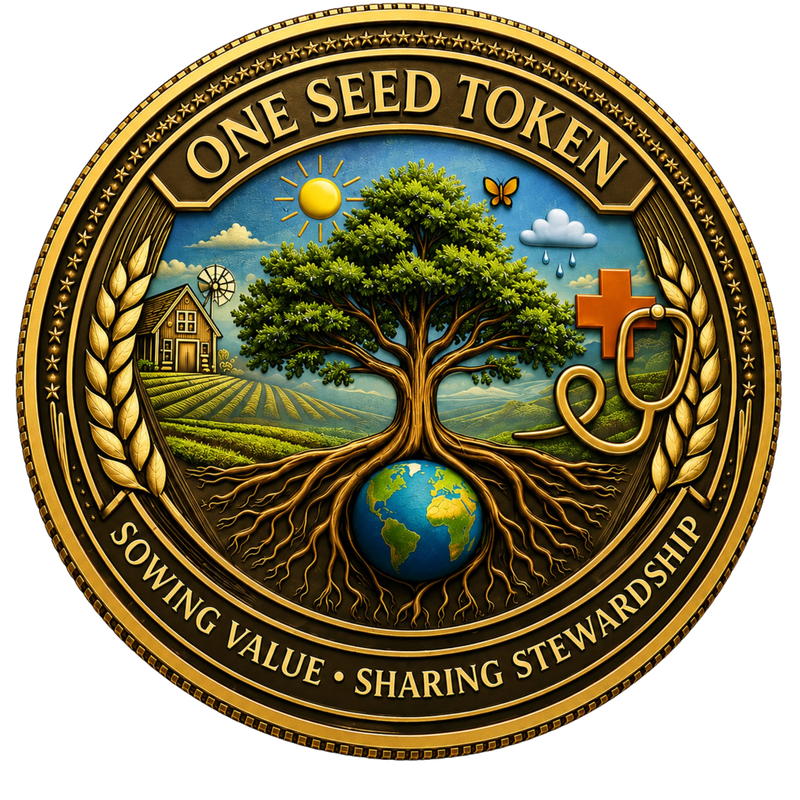
The Project operates across three domains. Each has its own committee, allocation rules, and quarterly reporting. None operates on discretion alone.
Land stewardship, equipment-sharing pools, harvest coordination, and farm continuity programs — anchored in shared infrastructure rather than dependency on extractive capital.
Student-athlete physicals, nutrition access, mental health partnerships, and rural healthcare bridge programs. Care that reaches the student before the season starts.
Scholarship endowments, equipment grants, alumni continuity, and Friday-night recognition. The pipeline that keeps Charleston's next generation rooted in Charleston.
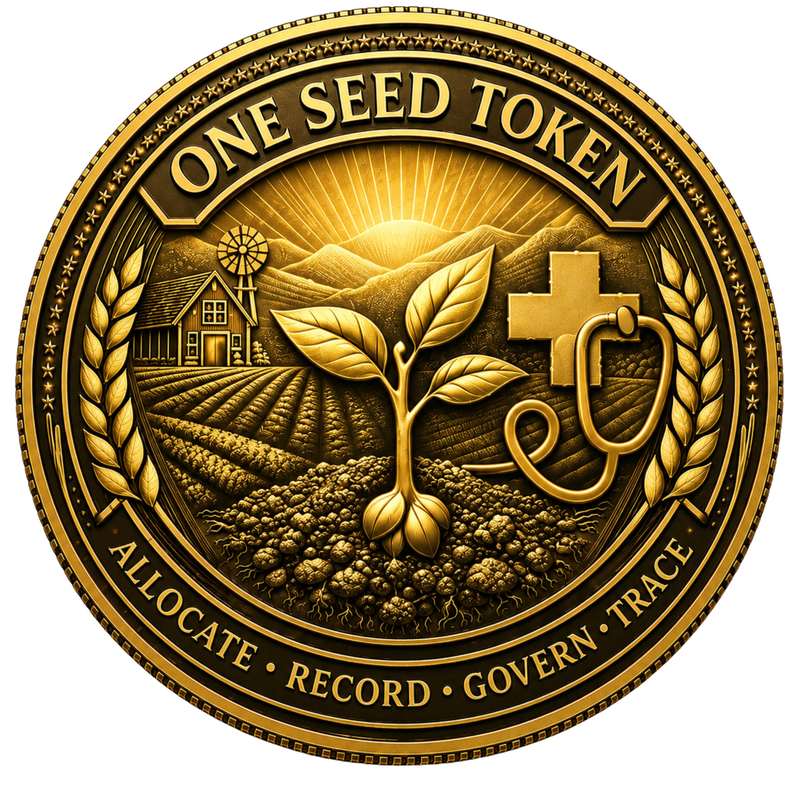
SEED is event-issued, milestone-released, and retired upon use. It coordinates participation, documents contribution, allocates resources, and records governance decisions across approved Project programs.
Seeds, tools, training, equipment, and cooperative services.
Verified labor, volunteer hours, and cooperative membership.
Cooperative decisions, oversight, and allocation prioritization.
Milestone-based release of approved program funding.
Not a security. Not an investment contract. Not a profit-sharing instrument. Not a promise of appreciation. SEED conveys no ownership, dividend, or yield rights.
If it cannot exist in the field, the gym, or the school lobby, it does not exist on-chain. Each program issues SEED for documented participation and retires it on redemption.
Friday Night Lights, structured.
A season pass token paired with a laminated badge. Concession discounts, raffle entries, VIP seating lottery. Funds equipment, travel, and youth recognition.
A named contribution to a permanent scholarship pool.
Supports the cradle-to-career pipeline. Holders receive annual scholar updates, recognition night access, and voting input on scholarship themes. Resale royalty rebuilds the pool.
Symbolic sponsorship of restored Charleston farmland.
Each acre is tied to a real field record. Sponsors receive seasonal yield reports, farm photos, and an annual Farm Day invitation. Funds support youth ag programs and equipment repair.
Seasonal access to local farm produce and harvest gatherings.
Discounts at participating farm stands, harvest dinner entry, and ag workshop access. Directly connects donor support to the table.
Four layers, four scopes. No single layer holds unilateral control over funds, issuance, or program approval.
Bank custody, contracts, compliance, and final allocation approval. Three to seven members.
Public trust, network mobilization, liaison to chambers, schools, and city government.
Sports, agriculture, scholarship, and wellness operations. Quarterly committee reporting.
Quarterly reports, public dashboards, and on-chain reconciliation to off-chain records.
A 7–11 member body of trusted local leaders who carry the Project's message into rooms where it matters: the school board, the city council, the chamber, the church, the farm.
Members commit to network engagement, annual gatherings, and 75% attendance at quarterly reviews. No honorary seats. Influence must convert to participation.
Quarterly reports will be published to the website, the school lobby, the chamber office, and the cooperative hall. The on-chain ledger reconciles to the off-chain record. The interface below is an illustrative preview — the figures shown are sample data, not actual Project results. The first live Quarterly Transparency Report will publish once the founding chapter completes its initial cycle.
The Project prefers careful supporters. Here are the questions we hear most — answered without hedge.
No. SEED is a utility token. It is not a security, an investment contract, or a financial instrument. It conveys no equity, no profit rights, and no expectation of appreciation. We do not market SEED for trading and we do not promote it as a financial product.
What it does: coordinates participation, records contribution, and unlocks access to defined Project programs. What it doesn't do: pay yield, distribute dividends, or behave as an asset class.
Because the ledger creates accountability that informal fundraising cannot. Every issuance is tied to a verifiable event. Every retirement is recorded. Every dollar can be traced from contributor to program to outcome. The token is an audit trail dressed as a community instrument.
If we could achieve the same transparency with a donation jar and a clipboard, we would. We can't.
They are sister initiatives that share the One Seed name and mission but operate as separate things. The One Seed Project is a founder-led community initiative — it designed and issued SEED, operates the treasury, and runs the programs you see on this site. It does not currently have a formal legal entity; establishing one is a near-term priority.
One Seed Foundation Inc. is a sister nonprofit corporation, separately governed, with federal tax-exempt status pending. It pursues its own charitable programs. The two organizations are not the same legal person and do not share governance. Any future flow of funds or services between them will be documented under formal agreements and disclosed in the Project's Quarterly Transparency Report.
Practical implication: acquiring or using SEED is participation in the Project, not a donation to the nonprofit. SEED participation does not produce a tax deduction. If you want to support the nonprofit directly, contact One Seed Foundation Inc. through its own channels and consult your tax advisor.
Four governance layers operate as documented commitments of the Project: a leadership layer holding legal authority for treasury custody and program approvals; the Community Quarterback Council holding relational authority; Program Committees holding domain authority over Sports, Agriculture, Scholarship, and Wellness; and a Transparency Office responsible for reporting. No layer can override another by informal authority.
By policy, no fewer than 60% of net funds raised in any cycle flow directly to youth, scholarship, or program services. Administrative overhead is capped at 20%. Because the Project currently operates without a separate legal entity, these are operational commitments of the founders and core contributors rather than enforceable obligations of a registered entity — a fact disclosed in Section 9.6 of the whitepaper.
Seven structural elements support the utility classification: a fixed pre-minted supply with no future mint authority, event-based treasury distribution tied to verifiable activity, no profit or yield rights, no equity claims, burn-on-redemption mechanics, capped voting weight, and public on-chain-verifiable allocation reporting. The whitepaper documents each.
If regulatory guidance evolves and adjustments are required, the Project will comply rather than circumvent. We design for durability, not loopholes.
Because the model has to work somewhere first. Charleston is small enough to be accountable, large enough to matter, and grounded in the things that the Project exists to support: farms, families, schools, and Friday-night lights. The framework is engineered to be replicable, but the founding chapter is deliberately local.
Every program has an in-person counterpart. You can sponsor an acre with a printed certificate, attend the harvest dinner with a paper ticket, donate to the Scholar Bond pool by check, or volunteer time toward the equipment co-op. The on-chain record is the audit trail. The community is the program.
Administrative overhead is capped at 20% of net funds raised by Project policy. The remaining 80% flows to programs. Operating costs cover transparency reporting, treasury custody, and infrastructure — all published in the quarterly report.
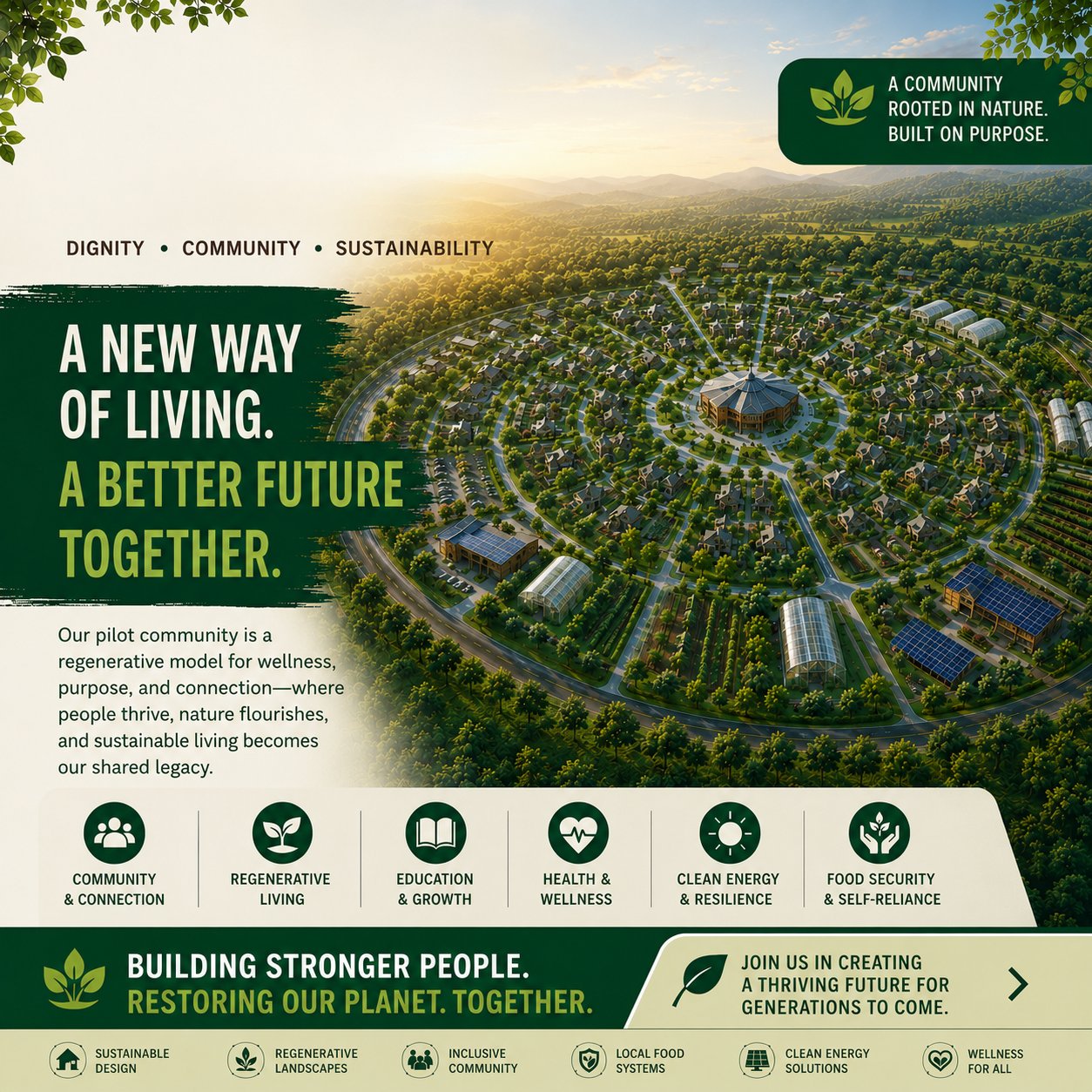
The One Seed Project stands as a proud supporter of The Haven Ecovillage Project — a kindred initiative built on the same principles that anchor our own work: regenerative land stewardship, cooperative living, and community resilience grounded in shared infrastructure rather than extraction.
Where The One Seed Project strengthens the rural systems that feed and sustain a community from the outside in, The Haven Ecovillage Project builds the intentional spaces where those values become daily practice. Different scales. Same roots.
Visit The Haven EcovillageThe One Seed Project is a founder-led community initiative. It currently operates without a separate legal entity; entity formation is a near-term priority. The Project designs, issues, and operates the SEED token and the programs described on this site.
One Seed Foundation Inc. is the Project's sister nonprofit corporation, separately governed, with federal tax-exempt status pending. The two share the One Seed name and mission but are distinct legal persons. Until exemption is recognized, contributions to One Seed Foundation Inc. should not be relied upon as tax-deductible. Acquisition or use of SEED is participation in the Project, not a donation to the nonprofit, and does not give rise to charitable deductibility.
The One Seed Token (SEED) is a utility token. It is not a security, an investment contract, a profit-sharing instrument, an equity interest, a debt instrument, or a promise of financial appreciation. SEED conveys no ownership, dividend, or yield rights.
Nothing on this site constitutes legal, tax, financial, or investment advice. Prospective participants should consult qualified counsel in their jurisdiction. The Project operates under the laws of the State of Missouri and applicable U.S. federal law.
The Project's formally adopted operating documents and governance commitments are the governing instruments of the Project's operations. Where conflict exists between this site and those governing instruments, the governing instruments control.
Join the founding chapter. Sponsor an acre. Become a Bluejay Booster. Contribute to the Scholar Bond. Or simply ask a question — we answer all of them, on the record.